International Rail Transit Services Through Iran
Rail is another important mode of international transport, and it can serve many kinds of shipments on suitable routes. Wagons matched to the cargo, including covered, open, flat, and container wagons, make it possible to carry a wide range of goods. For cargo transit in Iran toward the east and Central Asia, rail can be a strong option, provided a few technical details are planned for from the start.
Shahan Kalaban handles international rail transit directly. It is well suited to heavy, bulky, and high-value shipments.
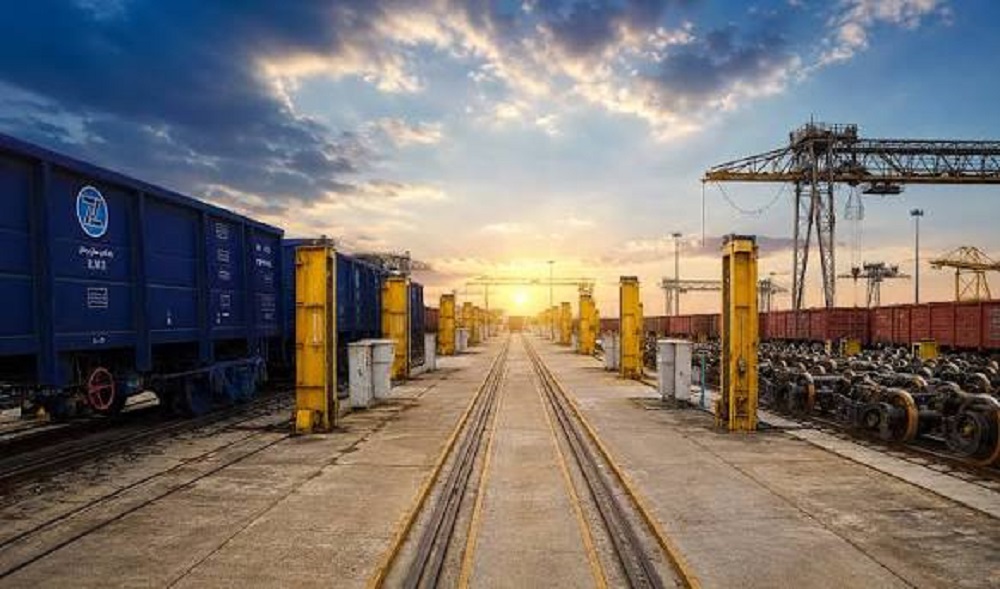
Bogie Changes at the Border: A Technical Detail to Include in Rail Time Estimates
One issue that matters for rail transit to Iran’s eastern neighbors and Central Asia is the difference in track gauge. Iran’s rail network uses the standard gauge of 1,435 mm, while Turkmenistan and most countries in Central Asia and the CIS region generally use 1,520 mm. For this reason, wagons must undergo a bogie change at the border rail crossing, for example at Sarakhs, one of the main transit bottlenecks between Iran and Central Asia. The wheels and axles of the wagon are replaced with bogies that suit the track gauge of the next country. This is a standard, routine step in international rail transport, but it naturally adds time and cost to the route, and it should be built into the delivery estimate at the first planning stage, not discovered at the border.
Two Legal Regimes for Rail Waybills: CIM and SMGS
Unlike road freight, which runs under a single convention (CMR), international rail carriage of goods falls under two separate legal regimes. CIM governs rail carriage on the networks of most European countries and some neighbors to the west. SMGS is the agreement on international rail freight among the railways of the Organisation for Cooperation between Railways (OSJD) and is used mainly on routes through Russia, Central Asia, and parts of East Asia. Because Iran sits at the meeting point of these two worlds, shipments whose route crosses both regions are usually moved on a combined CIM/SMGS consignment note. This document lets cargo pass from one legal regime to the other without a separate waybill at every border. Knowing which regime, or both, applies to your route before you book prevents documentary discrepancies at the border crossings, and it also helps ensure that the paperwork used for customs clearance in Iran matches what the next country will expect.
Choosing the Right Wagon for the Cargo
The wagon type should match the characteristics of the goods. Covered wagons suit cargo that needs protection from the weather. Open wagons suit bulk loads or cargo that needs no cover. Flat wagons suit machinery and cargo with non-standard dimensions. Container wagons carry containers on rail, especially on combined routes where part of the journey is by truck and part by train.
The Real Route of a Rail Shipment: From the Factory Gate to the Station and Back to the Road
The real route of many rail transit shipments is not only the time spent on the rails. The cargo usually travels first by road from the origin to the nearest rail station licensed for international traffic. After loading into a suitable wagon and issuing the rail consignment note, it makes the main journey by rail. At the destination station, or the station nearest the final destination, it is loaded onto a truck again and delivered to the final address. Managing these two road legs together with the main rail leg helps prevent pointless gaps between unloading from the train and final delivery, which is where much of the avoidable delay in cargo transport in Iran and beyond tends to appear.
Advantages of Rail Transit
Rail transit has several advantages that make it a competitive choice for a large share of commercial and industrial cargo:
Lower cost than air freight
High carrying capacity, especially for heavy and bulky cargo
Greater cargo security along the route than some other modes
Combined transport options (rail with road or sea) for routes with no direct rail access to the final destination
Practical Tips Before Booking Rail Transit
- 01
Estimate the schedule allowing for a possible stop for a bogie change at the border crossings on the route, not just the direct distance.
-
02
Before booking, check whether your route falls under CIM, SMGS, or both, so the documents will match.
-
03
Choose the wagon type by the real nature of the cargo (need for cover, non-standard dimensions, whether it can be containerized), not by the most common option.
-
04
For routes that need combined transport, plan road vehicles for both ends (to the origin station and from the destination station) from the beginning.
-
05
For recurring shipments on a fixed rail route, long-term coordination with one consistent team can shorten waybill issuance and wagon booking on later shipments.
Frequently Asked Questions About Rail Transit
Why do wagons need a bogie change at some borders?
Because Iran’s track gauge (1,435 mm) differs from that of Turkmenistan and most of Central Asia (1,520 mm). To cross these borders, the wagon’s wheels and axles are replaced with bogies that fit the next country’s track gauge.
What is the difference between CIM and SMGS in rail waybills?
CIM is the legal regime for rail carriage on the networks of most European countries, while SMGS is the agreement used mainly on routes through Russia, Central Asia, and parts of East Asia. For routes that cross both regions, a combined CIM/SMGS waybill is usually used.
Is rail transit always an all-rail route?
Not necessarily. In many cases the first and last legs of the route, from the origin to the rail station and from the destination station to the final address, are done by road, and only the main stretch runs on rail.
Your shipments are moved from origin to final destination with full customs and documentation coordination, and tracking and updates are provided throughout the journey. For free consultation and a quote for rail transit, cargo transport in Iran, customs clearance in Iran, or cargo transit in Iran, contact our specialists.